
PSHE and RSE at Sowerby
Linked to our Personal Development Document here
Intent
Our aim at Sowerby is to grow courageous learners. As part of our school philosophy, we promote a growth mindset through our teaching, learning and positive behaviour policy.
Our PSHE curriculum develops our school values of Resilience, Courage, Acceptance, Kindness and Respect. These values are introduced in the Early Years and underpin our inclusive ethos, ensuring continuity and progression as children move through the school. They are fostered across the wider curriculum and taught explicitly through our PSHE curriculum.
PSHE and RSE play a vital role in developing the foundational learning and life skills children need to succeed academically and personally. Beginning with Personal, Social and Emotional Development in EYFS, pupils progressively develop communication and oracy, emotional literacy, self-regulation, resilience, empathy, reflective thinking and problem-solving. These skills support positive learning behaviours, healthy relationships and effective engagement with learning.
We place a strong emphasis on children’s mental health, wellbeing and safeguarding. High-quality PSHE provision supports pupils to understand their rights and responsibilities, manage emotions, recognise risk seek help when needed and to assist them in the wider world within a diverse society.
Our curriculum reflects local issues and the lived experiences of our children and families. We celebrate diversity and are committed to equality of access for all learners, including those with special educational needs, disabilities and those who are vulnerable through adaptive and inclusive teaching.
Implementation
Whole School
PSHE is taught by skilled staff who create safe, inclusive and respectful learning environments. Practice across the school builds on Early Years principles, including modelling positive behaviour, explicit teaching of emotional vocabulary, consistent routines and clear expectations, ensuring a coherent approach to personal development.
A range of strategies are used, including discussion, role-play, storytelling, group work and reflection. These approaches support oracy, listening, collaboration and respectful communication, while enabling pupils to express opinions, develop empathy and think critically. Teaching is scaffolded and adapted to meet individual needs, supporting inclusion and engagement for all learners.
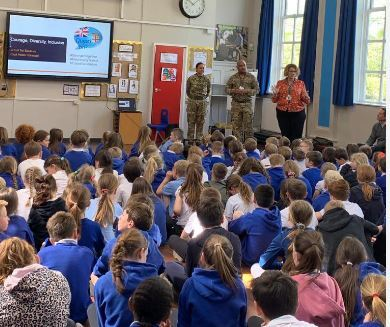
PSHE themes are reinforced through assemblies and the wider curriculum, including Modern British Values, awareness campaigns and visits from community and faith groups. External agencies are used where appropriate to enhance learning and provide specialist support.
Strong partnerships with parents and the wider community support consistent messages around wellbeing and relationships. Regular communication ensures parents are informed and able to continue discussions at home. PSHE provision is regularly monitored to ensure high-quality, inclusive teaching and clear progression from EYFS to Key Stage 2.
EYFS
We follow the Development Matters Early Years Curriculum.
Personal, Social and Emotional Development is a core area of learning and provides the foundation for all future PSHE. Communication and Language is also a key focus, supporting children to express themselves, listen to others and develop the vocabulary needed to understand their feelings, relationships and the world around them. Through high-quality interactions and responsive teaching, children develop attention, listening, turn-taking, independence, emotional regulation and positive relationships.
PSHE learning is embedded throughout daily routines, play-based experiences, stories, circle time and small group activities alongside opportunities to explore Understanding the World. Adults model inclusive language, kindness and respect, and support children to recognise feelings, manage conflict, develop empathy and build resilience. Teaching is adaptive and responsive to individual needs, ensuring all children feel safe, confident and able to participate.
Learning and progress are recorded through photographs and observations within the learning journey, supporting assessment and next steps.
Key Stage 1 and Key Stage 2
PSHE is taught in class groups using the PSHE Association Thematic Planning approach, ensuring consistency and progression across the school. In Key Stage 1, teaching builds directly on Early Years foundations, using familiar routines and language to support transition.
The spiral curriculum revisits key themes at increasing depth, enabling pupils to develop knowledge alongside essential life skills such as cooperation, resilience, goal-setting and reflection. Pupils are encouraged to discuss, collaborate and reflect, developing emotional literacy and respect for different viewpoints. Additional support and reasonable adjustments are provided to ensure all learners can access learning successfully.
Teaching is supported by a range of high-quality, age-appropriate resources, including 1decision and PSHE Association materials. Recording is flexible and adapted to individual needs, using floor books in Key Stage 1 and PSHE books in Key Stage 2.
Statutory Relationships and Sex Education are taught through PSHE and Science. Some content in Key Stage 2 is delivered in year groups to reflect pupils’ maturity. Non-statutory Sex Education is taught in Upper Key Stage 2, with sensitivity, inclusion and safeguarding at the forefront.
Relationships and Sex Education (RSE)
Relationships and Sex Education is delivered in line with our ethos, values and commitment to inclusion. Building on Early Years foundations, it provides a safe and structured space for sensitive discussions and prepares children for puberty through age-appropriate learning.
Pupils develop self-respect, confidence, empathy and understanding of healthy relationships. They are taught correct vocabulary for their bodies, learn about boundaries and consent, and are supported to know how and where to seek help. Teaching is inclusive, respectful and reflective of diversity.
Impact
The impact of our PSHE and RSE curriculum is evaluated through pupil voice, School Council, assemblies, link governor monitoring, parent consultation, learning walks, teacher feedback, examples of pupils’ work and curriculum review.
As a result of PSHE being firmly rooted in Early Years provision and developed progressively, pupils demonstrate strong emotional foundations, confidence in communication and positive learning behaviours. Children feel safe, valued and included, understand how to manage relationships and keep themselves safe, and are equipped with the foundational skills needed to thrive both in school and in the wider world.
“Pupils show respect for others. They learn about differences in race, religion and gender, and they value equality. The wider curriculum, alongside assemblies, promotes pupils’ understanding of themes such as health and equality. Pupils understand their feelings and how to deal with them. Pupils learn how to keep themselves safe.”
OFSTED June 2022