

Reading at Sowerby
Intent
At Sowerby Primary Academy, our intention is that all pupils develop a lifelong love of reading, achieve high standards of literacy, and become confident and independent readers. The intent of reading in our school is to:
- Foster a passion for reading by creating a reading-rich environment that celebrates and values literature.
- Ensure all pupils have access to a wide range of high-quality reading materials that reflects their interests, backgrounds, and diverse cultures.
- Develop pupils’ reading skills progressively, allowing them to acquire fluency, comprehension, and critical thinking abilities.
- Promote reading for pleasure as well as reading for academic purposes.
- Ensure that all pupils, including those with SEND, can access reading through adaptive teaching strategies, scaffolded support, and personalised interventions.
Implementation
Phonics and Early Reading
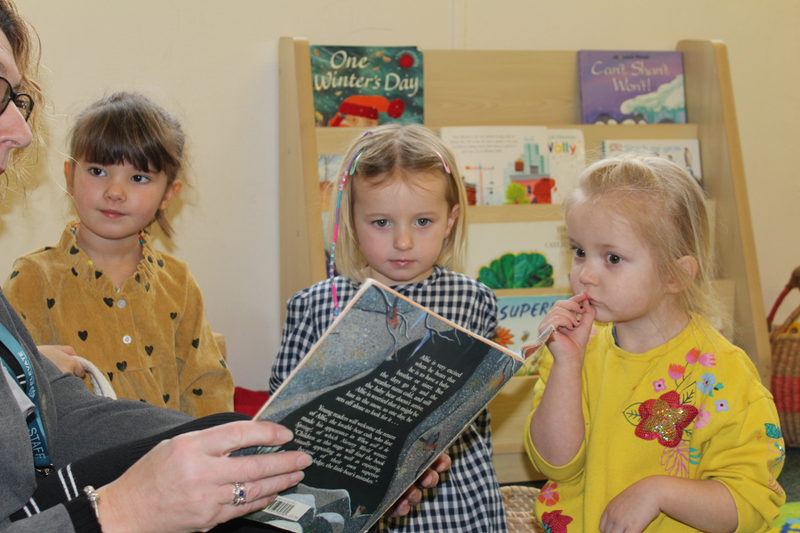
In Early Years and Key Stage 1, we use a range of approaches to develop children’s early reading skills, including shared reading, storytelling, and explicitly extending children’s vocabulary. We believe that early reading requires a broad and balanced approach, which is more effective than focusing on any single aspect of reading.
In Early Years, there is a strong focus on developing language and communication, which supports early literacy as well as children’s wider knowledge and understanding. To develop language comprehension, we focus on:
- Oracy
- Vocabulary development
- Language structures
- Background knowledge through storytelling and shared reading activities
- To support decoding, we follow the Essential Letters and Sounds phonics programme. (For further details, see the Phonics Curriculum page.)
- For pupils with SEND, adaptive teaching strategies are used in Early Years and Key Stage 1, such as:
- Additional modelling and repetition of phonics sounds and high-frequency words
- One-to-one or small group support for children who require extra help
- Use of visual prompts, multisensory activities, and simplified texts where needed
- Scaffolded sentence construction and comprehension activities
Whole Class Reading
Reading is taught discretely in a daily, thirty-minute reading lesson. In Years 2–6, key reading skills are developed through guided access to beautiful, rich, and authentic texts. Across the school year, children systematically explore a wide range of texts.
Teachers introduce a whole text, pivotal moments, or challenging content by activating schema, helping children link prior knowledge to the text. Lessons may also involve pre-teaching vocabulary that children need to access and understand the reading.
In all whole-class reading lessons, children practice reading with fluency and expression through strategies such as:
- Cloze reading – following text read by the teacher and filling in gaps
- Choral reading – reading passages aloud together as a class
- Echo reading – repeating key sentences modelled by the teacher
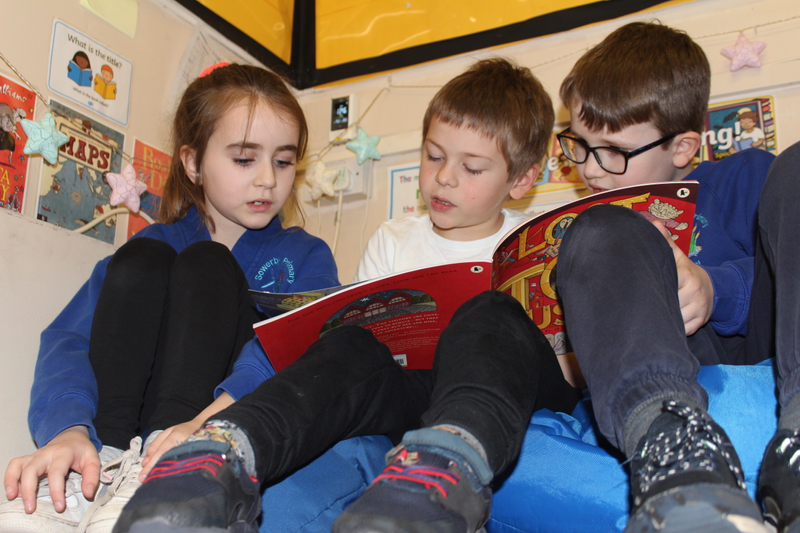
- Paired or group reading – reading aloud to peers in small groups
Teachers then model and explicitly teach reading skills, such as making judgements about a character’s personality, empathising with a character in a dilemma, or predicting what might happen next. Children observe the process of being a reader before working independently.
The main body of a whole-class reading lesson focuses on exploring the text, its language, and the impact of the language used. While reading lessons are not reduced to “teaching to the test,” there is a clear and consistent focus on test-style questions, based on content domains and end-of-key-stage assessment question stems, at the end of each lesson.
Support for SEND pupils in whole-class reading includes:
· Pre-teaching key vocabulary and concepts before reading
· Simplifying or chunking texts where needed
· Providing additional adult support during group activities
· Using visual aids, story maps, and reading prompts to scaffold comprehension
· Allowing additional processing time and flexible responses during discussions
Individual Reading and Fluency
Children are encouraged to read often, giving them practice to decode, recognise words at sight, and read with expression. Reading is integrated across the curriculum as a method of accessing and presenting information.
Individual reading and fluency are supported through:
- The school’s phonics and reading schemes
- Whole-class reading lessons
- Weekly adult-supported reading for pupils currently using a reading scheme book
- Targeted intervention for pupils who do not pass the Year 1 phonics screening check, ensuring they develop decoding skills and reading fluency
- Children also have regular opportunities to read for pleasure independently, through:
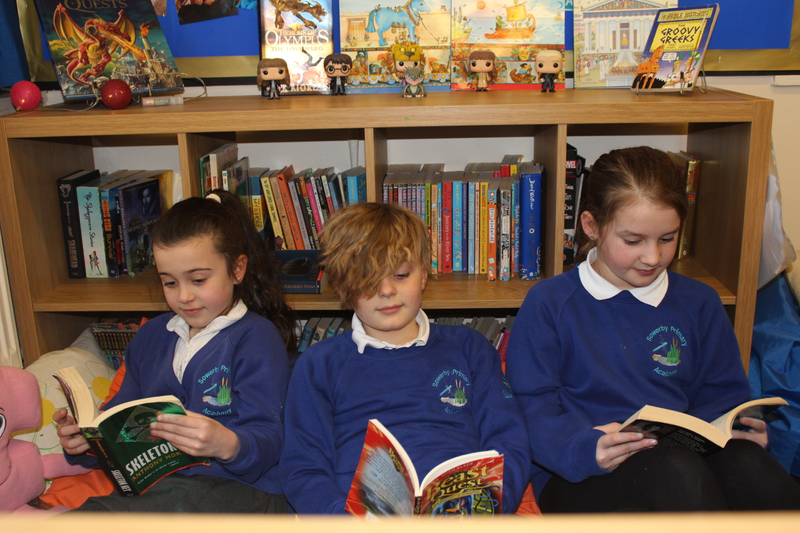
- Class libraries and reading areas
- High-quality, age-appropriate and stage-appropriate texts available to take home
- SEND pupils are supported individually through:
- Personalised reading plans tailored to their strengths and needs
- Adaptive teaching strategies and scaffolded support to ensure progress
- Regular, targeted interventions to address specific reading gaps
- Opportunities to access texts at an appropriate level without limiting exposure to challenging vocabulary
This approach ensures that all pupils, including those with SEND, can access reading lessons, develop confidence, and achieve success, while fostering a lifelong love of reading.